Division 01 of 06
Natural Fertilizers
- Product lines
- 7 listed
- Markets
- 6 trade lanes
- Paperwork
- 8 document types
- Reply to enquiries
- Within one business day
Scope · Natural Fertilizers and Soil Reclamation Materials
NIB 1408260055631 · KBLI 46100 — wholesale trade on a fee or contract basis
In brief
Our soil amendment range covers mined agricultural gypsum, calcitic lime and dolomite, formed elemental sulphur, leonardite-based humic and fulvic products, natural zeolite, sphagnum peat, washed coco peat and composted organic matter, in bulk or in bags. Each grade is priced on the figures that govern how it performs in the field — purity, neutralising value, particle size distribution and moisture — and never on a brand name. If the buyer's market keeps a national fertilizer register or an organic scheme, the specification is drafted to that standard before any offer goes out; for Indonesia, that means checking the product against Ministry of Agriculture registration and, where one applies, the relevant SNI.
We buy from quarries, mines and processors, and no source ships for the first time until it has passed a full analysis, a particle size curve and a retained-sample check. On request, a load-port surveyor — SGS, Bureau Veritas, Intertek or one the buyer nominates — samples the cargo by the method named in the contract and issues the certificate of analysis. Those results are read against the producer's own laboratory report, and any gap is resolved while the cargo is still on the quay rather than after it lands.
Depending on tonnage and the unloading equipment at destination, cargo travels in bulk, in FIBCs or as palletised small bags, by container or as breakbulk. Finely ground and moisture-sensitive grades go in lined or laminated bags, and bulk-in-container loadings use a liner. For organic substrates we arrange whatever phytosanitary paperwork, fumigation or heat treatment the importing plant-protection authority asks for — for shipments into Indonesia, the requirements of the Indonesian Quarantine Agency (Barantin).
Where it is used
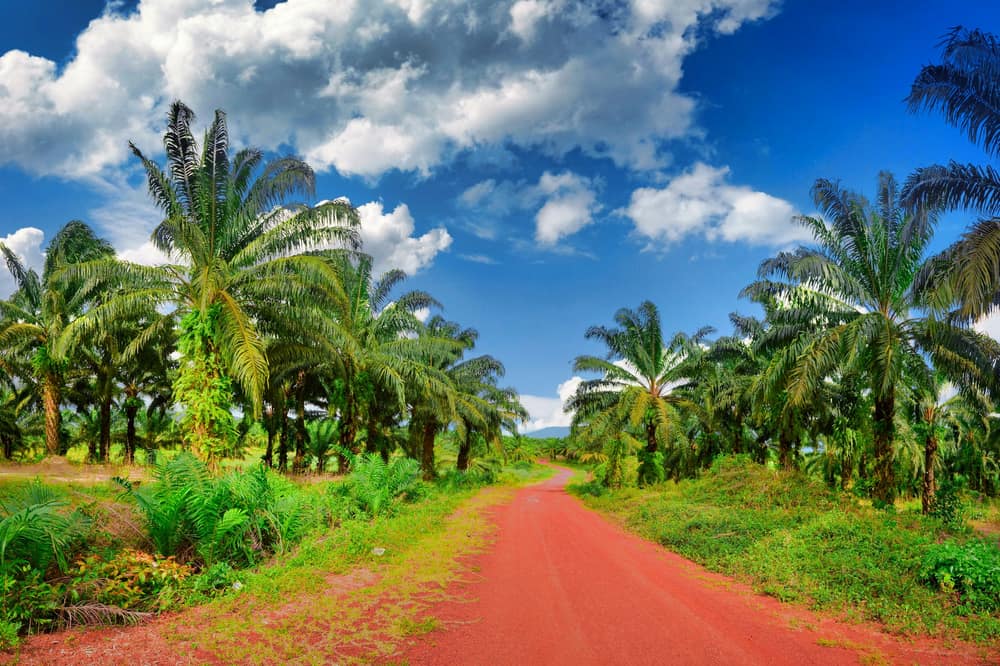
- Liming acidic mineral and peat soils under oil palm, rubber and other estate crops
- Restoring calcium and magnesium where tropical rainfall has leached out the base cations
- Reclaiming sodic and saline-sodic ground, where soluble calcium displaces exchangeable sodium
- Better infiltration and soil structure, with less surface sealing after heavy rain
- Sulphur nutrition for oilseeds, onion, shallot and brassica crops
- Nursery and propagation media, and humate or biostimulant programmes on low-organic soils
Markets we ship to
- Indonesia — Sumatra, Kalimantan, Sulawesi and Java
- Malaysia and Thailand
- Vietnam and the Philippines
- South Asia — India, Bangladesh and Sri Lanka
- Australia and Papua New Guinea
- East Asia — China, South Korea and Japan
Product lines
Grades, typical analyses and pack formats
Typical figures, published so a buyer can check the fit before getting in touch. The binding values and tolerances are the ones written into our offer.
01
Agricultural Gypsum — Granular and Powder
Mined calcium sulphate dihydrate, used to reclaim sodic soils and to add calcium and sulphur without moving pH. Powder grades suit spreading; granular grades suit blending.
Packaging
- Bulk
- 1,000 kg and 1,250 kg jumbo bags (FIBC)
- 50 kg PP woven bags
- 25 kg laminated bags, palletised and shrink-wrapped
| Purity | CaSO₄·2H₂O 85–95%, by grade |
|---|---|
| Nutrient content | Ca 20–23%, S 15–18% |
| Particle size | Powder 0–2 mm; granular 2–4 mm; agglomerated grades on request |
| Free moisture | 2% max (granular); 6% max (powder) |
| HS Code | 2520.10 |
02
Agricultural Lime and Dolomite
Ground calcitic limestone and dolomite for raising soil pH and supplying calcium and magnesium — staple inputs on plantation soils across the archipelago. Priced on carbonate equivalent and fineness, which together decide how quickly the material reacts.
Packaging
- Bulk
- 1,000 kg jumbo bags (FIBC)
- 50 kg PP woven bags
- 25 kg laminated bags, palletised
| Calcitic grade | CaCO₃ 90–96%; calcium carbonate equivalent 90–100% |
|---|---|
| Dolomitic grade | CaCO₃ + MgCO₃ 95% min; MgO 18–21% |
| Fineness | Typically 80% passing 150 µm (100 mesh); coarser spreading grades on request |
| Moisture | 1.5% max |
| HS Code | 2521.00 (limestone); 2518.10 (dolomite, not calcined) |
03
Elemental Sulphur — Granular and Bentonite Pastilles
Formed sulphur used both as a nutrient and to bring pH down on calcareous ground. Bentonite-blended pastilles break apart in moist soil and oxidise far sooner than lump sulphur.
Packaging
- 25 kg and 50 kg PP woven bags with PE liner
- 1,000 kg jumbo bags (FIBC)
- Bulk
| Purity | S 99.8% min (granular); S 90% with 10% bentonite (pastilles) |
|---|---|
| Form | Granules, prills or pastilles, 2–4 mm |
| Moisture and ash | Moisture 0.5% max; ash 0.05% max; acidity 0.01% max as H₂SO₄ |
| Transport classification | UN 1350, Class 4.1 as powder or dust; sulphur formed into prills, granules, pellets, pastilles or flakes is exempt under IMDG special provision 242 |
| HS Code | 2503.00 |
04
Potassium Humate and Leonardite
Leonardite humate as flake, granules or soluble powder, alongside raw leonardite for broadcast application. Sold on humic acid content measured by a named analytical method.
Packaging
- 25 kg PP woven bags with PE liner
- 20 kg fibre drums for soluble grades
- 500 kg and 1,000 kg jumbo bags (FIBC)
| Humic acid | 60–70% dry basis (flake and soluble grades); 40–50% raw leonardite |
|---|---|
| Potassium | K₂O 8–12% |
| Water solubility | 95% min for soluble powder and flake grades |
| pH and moisture | pH 9–10 in 1% solution; moisture 15% max |
| HS Code | 3101.00 is commonly used; humate classification varies by jurisdiction and should be confirmed with the clearing agent |
05
Seaweed Extract — Ascophyllum nodosum
Seaweed powder and flake produced by alkaline extraction, used as the biostimulant element in soluble fertilizer and foliar programmes.
Packaging
- 25 kg kraft paper bags with PE liner
- 20 kg cartons
- 1 kg foil pouches for trial quantities
| Species | Ascophyllum nodosum; other species on request |
|---|---|
| Organic matter | 40–45% |
| Alginic acid | 15–20% |
| Potassium | K₂O 15–18% |
| Solubility | Fully soluble powder; flake grades 95% min |
| HS Code | 3101.00 for extracts in fertiliser presentation; 1212.29 for unprocessed algae |
06
Coco Peat and Sphagnum Peat
Washed and buffered coco peat in compressed blocks, and low-pH sphagnum peat for substrate mixes. Whether a batch is usable comes down to its electrical conductivity and pH.
Packaging
- 5 kg compressed blocks, shrink-wrapped and palletised
- 650 g bricks in cartons
- 20–30 kg compressed bales
- Loose in containers for bulk substrate
| Coco peat EC | Washed below 1.0 mS/cm; buffered low-EC grades below 0.5 mS/cm |
|---|---|
| Coco peat pH and moisture | pH 5.5–6.5; moisture 15–20% |
| Sphagnum peat | pH 3.5–4.5; organic matter 90% min; H2–H5 on the von Post scale by grade |
| Compression | 5 kg blocks, 650 g bricks and 20–30 kg bales; 1:5 to 1:8 expansion ratio |
| HS Code | 5305.00 (coir pith); 2703.00 (peat) |
07
Natural Zeolite — Clinoptilolite
Screened clinoptilolite that adds cation exchange capacity, holds ammonium and retains water in sandy soils and substrate systems.
Packaging
- 25 kg PP woven bags
- 1,000 kg jumbo bags (FIBC)
- Bulk
| Mineralogy | Clinoptilolite 85% min |
|---|---|
| Cation exchange capacity | 120–180 meq/100 g, method stated on the certificate |
| Particle grades | 0–1 mm, 1–3 mm, 2.5–5 mm and 5–10 mm |
| Moisture | 8% max |
| HS Code | 2530.90 |
Shipping & paperwork
How the cargo is packed, priced and documented
Packaging & stowage
- Moisture-sensitive and finely ground material is packed in PP woven bags with a PE inner liner, or in laminated bags; unlined bags are kept for products that tropical humidity does not affect.
- Each FIBC is specified by safe working load and safety factor — 5:1 for single trip, 6:1 for multi-trip — with lifting loops and discharge spout written into the order.
- Bag marks carry product, grade, net weight, lot, production date and origin; the buyer's own marking and language, Bahasa Indonesia included, are applied on request.
- Bulk-in-container loads use a liner and bulkhead. With dense minerals the limit is the container's payload, not its cubic capacity.
- Palletised goods are stretch-wrapped, and any timber used is heat treated and stamped to ISPM 15.
Incoterms we use
- FOB — the buyer appoints the vessel or books the containers; we deliver, clear export and load at the named port.
- CFR — we contract sea freight to the named port of discharge; risk transfers at loading and insurance sits with the buyer.
- CIF — CFR plus marine insurance at the Institute Cargo Clauses (C) minimum that Incoterms 2020 sets for CIF; broader cover can be arranged.
- FCA — export-cleared handover at a named inland point or terminal, for buyers who manage their own freight.
- DAP — delivery to the buyer's warehouse or estate, with import clearance and duties on the buyer's side.
- EXW — collection from the works or warehouse, used chiefly for samples and trial lots.
Documents supplied
- Commercial invoice and packing list giving grade, net and gross weight and HS code for each line
- Bill of lading, or charter party bill of lading accompanied by the charter for breakbulk parcels
- Certificate of origin — ATIGA Form D where ASEAN preference is claimed — legalised where the destination asks for it
- Certificate of analysis naming the test method behind every declared parameter
- Independent inspection report on sampling, quality and weight at the load port
- IPPC-format phytosanitary certificate for peat, coir and composted organic material
- Fumigation or heat-treatment certificate where the importing country calls for one
- GHS-format safety data sheet for sulphur and any other regulated item
For producers
Supplying this division
Producers of gypsum, lime and dolomite, sulphur, humates and growing media are invited to send a complete analysis, monthly availability and load port. We qualify a source on documented results and a retained sample — a brochure is not evidence.
Start an enquiry
Give us the grade and the port. We will return origins, terms and a firm price.
Quantity, destination, delivery window and the specification you buy against are enough to begin. Where a product falls outside our book, we tell you plainly instead of offering a substitute.
Answered within one business day · Denpasar, Bali